Frame
Agree the problem, sponsor, scope, participants, and review points.
Working outputDecision statement and engagement plan.
Across our services, we begin by naming the decision, the people accountable for it, and the evidence needed. The scope and pace are agreed for each engagement.
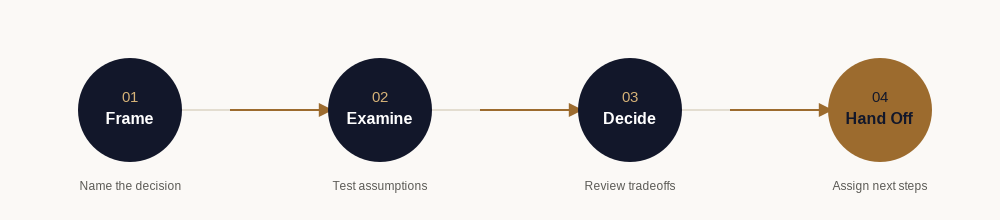
We begin with the question that needs an answer and the people accountable for it.
We test the question against the client's evidence and operating context.
Decision owners review options and tradeoffs at agreed checkpoints.
We close with clear decisions, open questions, and next owners. The client retains operational ownership.
We tailor the sequence to the engagement. The accountable lead coordinates the work and brings in specialist perspectives as agreed.
Agree the problem, sponsor, scope, participants, and review points.
Working outputDecision statement and engagement plan.
Review workflows, evidence, dependencies, and stakeholder perspectives.
Working outputEvidence summary and identified gaps.
Bring options and tradeoffs to the sponsor at agreed checkpoints.
Working outputDecision record and prioritized next steps.
Confirm responsibilities, open items, and materials for the receiving team.
Working outputOwnership and transition plan.
Implementation support, if needed, is defined separately in the agreed scope.
Information for procurement teams →A decision record gives the people involved one place to see the question, evidence, owner, and next review point. This illustrates the structure, rather than a client result.
Review an illustrative decision briefServices define what we advise on. Approach defines how a decision is made and handed off.
Tell us the decision in front of you and the context around it. We can discuss whether our services and working method fit.
Request a conversation